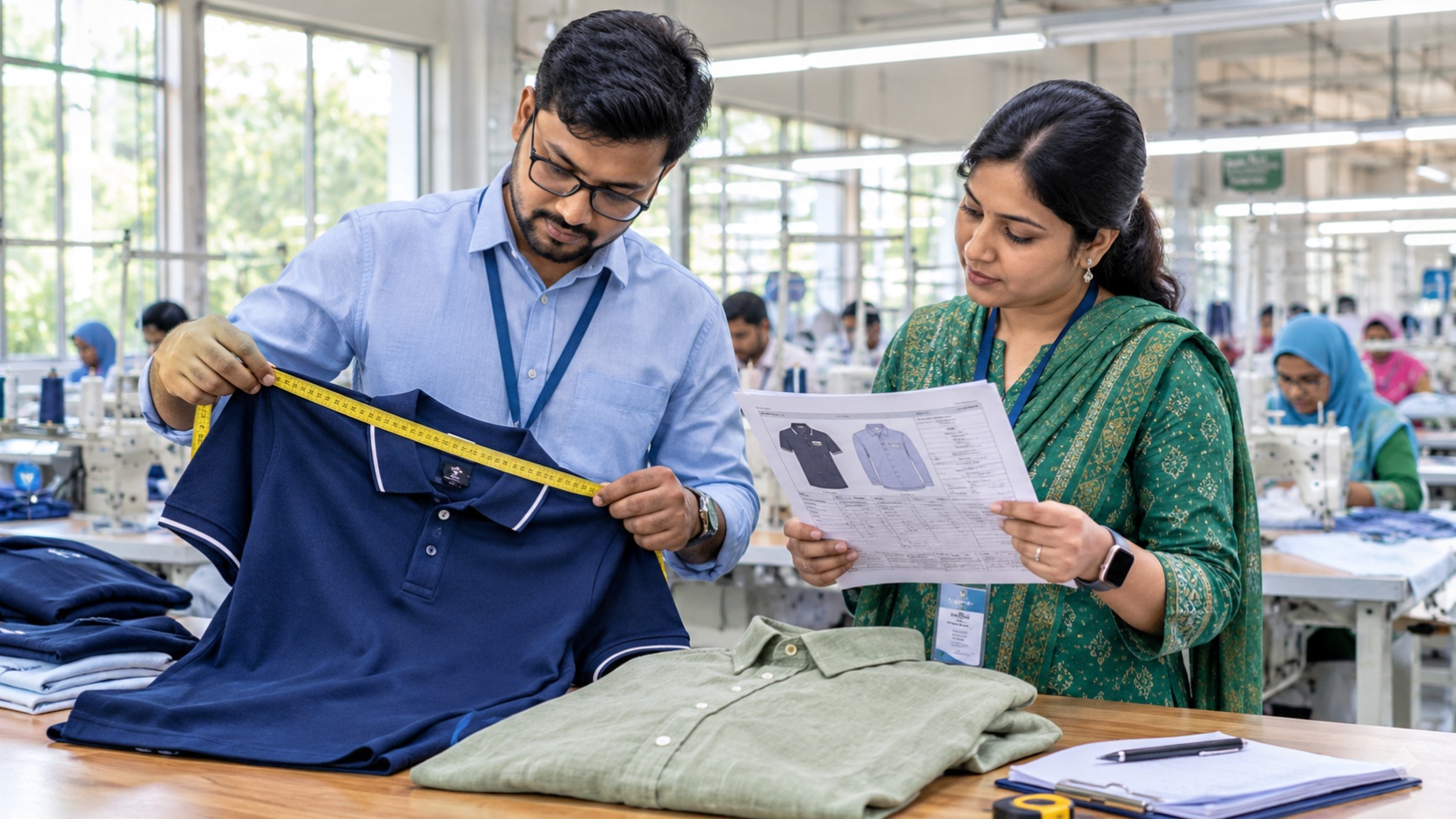
Finding a garment factory in Bangladesh is easy. Finding one that actually understands your brand’s fit standards, hits your delivery window without excuses, and passes customs smoothly is a completely different story.
Over the past decade, Bangladesh has become the go-to manufacturing hub for fashion labels, retail chains, and fast-growing e-commerce brands across the USA, EU, UK, Canada, Australia, Japan, South Korea, and the Middle East. With thousands of factories operating across Dhaka, Gazipur, Narayanganj, and Chattogram, overseas buyers often struggle to separate reliable export partners from middleman traders or overbooked workshops.
At RIOLEAF LTD (rioleaf.com.bd), we work closely with international sourcing teams every day on core knitwear and light woven collections. Based on real factory-floor experience, here is a practical 10-point checklist to help you vet and select the right manufacturing partner in Bangladesh.
1. Confirm Product Specialization (Knitwear vs. Woven Lines)
Never trust a factory that claims to make every garment category under one roof—from heavy winter parkas and denim jeans to silk dresses and seamless activewear. Garment machinery, worker muscle memory, and fabric handling are completely different between heavy structured wovens and stretch knits.
Look for a supplier whose floor layout matches your core SKU mix:
- Core Knitwear Production: Specialized circular-knit sewing lines equipped with overlock, flatlock, and coverstitch machines for combed cotton T-shirts, pique polo shirts, French terry sweatshirts, brushed fleece hoodies, and performance activewear.
- Light Woven Capabilities: Dedicated single-needle lockstitch and fusing setups built for casual linen/cotton shirts, poplin button-downs, chino shorts, and lightweight summer trousers.
At RIOLEAF LTD, knitwear is our primary engine, supported by separate, dedicated lines for light woven apparel—allowing brands to source coordinated tops and bottoms under one roof without compromising stitch quality.
2. Verify Direct Duty-Free Export Registrations (EU REX & UK DCTS)
If you import into Europe or the United Kingdom, a factory’s paperwork matters just as much as its sewing machines. Standard import tariffs on finished knit and woven garments sit at 12%.
Before placing an order, ask your potential supplier for proof of their trade registrations:
- EU REX System Registration: Under the Everything But Arms (EBA) scheme, Bangladeshi garments enter all 27 EU member states at 0% customs duty—provided the exporter holds an active Registered Exporter (REX) number to issue Statements on Origin on commercial invoices.
- UK DCTS Compliance: Under the UK Developing Countries Trading Scheme, garments from Bangladesh enter Great Britain and Northern Ireland with 0% import tariff, backed by flexible single-transformation rules of origin.
- Preferential Access for Canada & Australia: Confirm the factory regularly issues GSP/GPT origin documentation for smooth zero-duty clearance in Toronto, Vancouver, Sydney, or Melbourne.
3. Check Vertical Fabric & Dye-House Connections
In apparel manufacturing, 70% of production delays happen before a single pair of scissors touches the fabric. If your factory relies on unvetted third-party fabric brokers, you risk off-shade dye lots, high shrinkage rates, and missed vessel cut-offs.
Ask how the factory sources its yarn and greige fabric:
- Do they work directly with vertically integrated spinning mills and automated dye houses?
- Can they run accurate Pantone lab-dips within 5 to 7 days?
- Do they test fabric GSM, spirality (twisting), and wash shrinkage before cutting begins?
4. Evaluate Pattern-Making & Tech Pack Interpretation
A great manufacturer doesn’t just blindly follow a Tech Pack—they catch potential construction flaws before sampling starts. During your initial communication, pay attention to how the merchandising and technical teams respond to your spec sheet.
A strong technical team will proactively ask about:
- Seam allowance tolerances and Stitches Per Inch (SPI) requirements.
- Rib-to-body weight ratios on crewnecks and hoodies so collars lie flat.
- Interlining and fusing grades on light woven shirt collars and plackets.
- Shrinkage allowances built into the CAD marker before bulk fabric is laid out.
5. Look Closely at Sample Room Turnaround & Accuracy
Your Proto Sample and Pre-Production (PP) Sample are the clearest preview of how your bulk order will turn out. If a factory takes four weeks to sew a basic cotton tee—or sends a sample with crooked pockets and wrong measurements—bulk production will be a nightmare.
A well-run export factory typically delivers initial proto samples within 7 to 14 days, accompanied by a clear measurement sheet showing actual vs. target specs.
6. Demand a Clear, Multi-Stage Quality Control System (AQL 2.5)
Waiting until the final day of packing to inspect garments is a recipe for disaster. By that point, fixing defects means missing your shipping vessel. Make sure your manufacturer enforces quality checks at four distinct stages:
| Inspection Stage | What Gets Checked | Why It Protects Your Brand |
| 1. Incoming Fabric Audit | 4-Point visual check, GSM weight, color fastness, shrinkage | Stops defective or off-shade fabric before cutting |
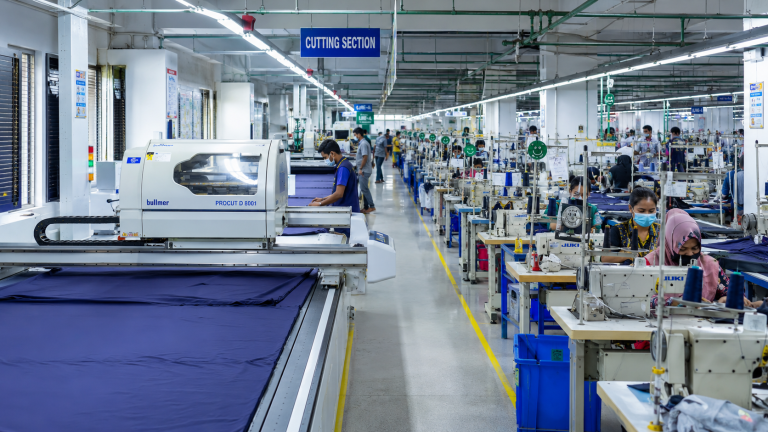
| 2. Cutting & Panel Check | Marker accuracy, notch alignment, bundle numbering | Prevents twisted seams and mismatched left/right panels |
| 3. Inline Sewing Audits | Hourly checks on SPI, tension, print/embroidery placement | Catches sewing mistakes immediately on the line |
| 4. Final Pre-Shipment Audit | Statistical AQL 2.5 inspection (measurements, barcodes, packing) | Guarantees retail-ready cartons before port dispatch |
Always confirm that the factory welcomes independent third-party inspection agencies (such as SGS, Intertek, or Bureau Veritas) prior to final shipment.
7. Verify Social, Workplace & Chemical Compliance
Modern retail customers—and customs authorities in the USA, EU, and UK—scrutinize where clothes are made. Partnering with a non-compliant workshop puts your brand’s reputation and retail distribution agreements at risk.
Ensure your supplier maintains:
- Valid structural, fire, and electrical safety clearances.
- Fair wage practices, transparent working hours, and zero child labor.
- OEKO-TEX Standard 100 compliance on dyes, prints, and trims so garments are free from restricted chemicals.
- Access to certified sustainable materials like GOTS/OCS Organic Cotton and GRS Recycled Polyester when your collection calls for them.
8. Ask About Realistic MOQs and Capacity Flexibility
Some massive factories only accept orders starting at 50,000 pieces per style, leaving growing brands ignored. On the other hand, tiny workshops lack the compliance and testing infrastructure needed for international export.
Look for a balanced mid-to-large exporter that offers flexible Minimum Order Quantities (MOQs) for new seasonal programs while still having the line capacity to scale up to tens of thousands of units once a style becomes a bestseller.
9. Test Communication Speed & Merchandising Transparency
Time zones shouldn’t slow down your supply chain. Whether your buying office is in New York, London, Berlin, Tokyo, Sydney, or Dubai, your merchandiser should provide clear, proactive updates without you having to chase them every morning.
During early discussions, notice:
- Do they reply to FOB costing inquiries within 24 to 48 hours?
- Do they break down fabric consumption, trim costs, and washing charges transparently?
- Will they send weekly photo and video updates from the sewing and finishing floors during bulk runs?
10. Check Logistics & Port Execution Experience
Even perfectly stitched garments lose value if shipping documents have errors. Your manufacturer’s commercial team must know the exact customs requirements for your destination port—whether shipping FOB Chittagong, CIF, or air freight via Dhaka (DAC). Accurate packing lists, carton barcode labels, commercial invoices, and origin certificates ensure your freight forwarder clears cargo without storage demurrage.
Start a Conversation with RIOLEAF LTD
Choosing the right factory comes down to trust, technical capability, and consistent execution. At RIOLEAF LTD, we build long-term partnerships with apparel brands across the USA, EU, UK, Canada, Australia, Japan, South Korea, and the Middle East—delivering high-grade knitwear and light woven apparel backed by 0% EU REX / UK DCTS duty-free advantages and strict AQL 2.5 quality control.
Planning your next seasonal drop or looking to benchmark your current FOB pricing? Send your Tech Pack or inquiry directly to our merchandising desk—we will get back to you within 48 hours.
- Website: rioleaf.com.bd
- Direct Merchandising Email: mustain@rll.com.bd
- Core Products: Knitwear (T-Shirts, Polo Shirts, Hoodies, Sweatshirts, Activewear) & Light Wovens (Casual Shirts, Shorts, Lightweight Trousers)